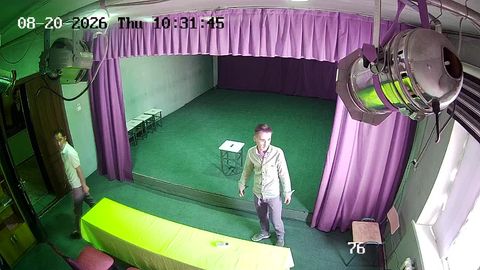
 LIVE
LIVEExhibition gallery
The current wide view of the gallery and how many visitors are in it.
rtsp.me turns the stream from an existing IP camera into a broadcast for the browser. Visitors can see the atmosphere of a gallery, an exhibition being installed or a public event, while staff can keep an eye on several spaces privately.
A live field of view keeps interest up before a visit and makes the cultural program more accessible, but it does not replace a guided tour or a digital catalog. Before publishing, the museum checks the rights to the works, performances and design, as well as the rules on filming visitors.
Connect a museum cameraA public wide shot shows whether the display is open, what the space looks like and what is happening in the approved area right now. The stream can sit alongside the timetable, the exhibition description or an event page.
For the team, museum cameras give an overview of the entrance, the galleries, collection routes and branches. Different levels of access mean the promotional stream is never mixed up with security surveillance.
A single field of view does not show the whole collection, labels may be illegible, and visitors temporarily blocking the view is only natural. Accessibility and education call for separate material, subtitles and descriptions.
If an IP camera provides an accessible RTSP stream, it can be connected to rtsp.me without a dedicated computer for broadcasting. The public field of view is chosen so that it does not reveal security zones, sensors, staff corridors or details of the security system.
Stable lighting, a reliable network and agreed codec settings all matter for a stream. The service delivers the original video, but it does not correct the physical field of view and does not grant you rights to show what is in frame.
A live wide shot of a gallery shows how busy the display is and helps visitors choose when to come.
LIVEThe current wide view of the gallery and how many visitors are in it.
Before you announce it, check the stream on a mobile device, review the notices for visitors and make sure no sensitive security features are visible.
Collection stores, staff corridors, security posts and cameras that reveal details of protective infrastructure are not published. For events, decide in advance where the frame ends and how participants will be informed.
The archive helps you reconstruct what happened in a gallery or keep an approved excerpt of the program. The retention period, access and any further use of a recording are determined by the museum's purposes, its contracts and the applicable requirements.
Monitoring notifies you when a signal is lost, but it does not replace intruder alarms, physical security and climate control. If the local network goes down, an unavailable video stream cannot be delivered to viewers.
Avoid identifiable close-ups of visitors, give notice that filming is taking place, and take account of copyright, related rights and personal data rights. A publicly accessible player does not mean viewers may copy or reuse the material shown.
Connect an approved field of view of the display and add a current stream to your website that visitors will come back to.
Keep public and internal cameras apart, set up the archive and monitoring, and check the rights to everything in frame in advance.
Connect your museum